

6 small space living ideas with big impact
From simple rental swaps to home reno projects.

When I was in college, I made a to-scale floorplan of my dorm room with tiny cut-outs for the furniture, so I could experiment with layouts to get the maximum function and flow for my roommate and I. Our room was probably 200-square-feet and had to fit our beds, desks, dressers, bookshelves, and, of course, a bean bag chair.
I’ve always loved thinking about how we occupy space. If I’ve been to your home, I’ve likely rearranged its contents in my head. There is something so satisfying about unlocking the best way to furnish a place so it feels good and works well. Having spent my early adulthood living in apartments varying in size from 900- to 1,400-square-feet, I’ve become a layout Tetris pro. (My home now, at 2,000-square-feet, is by far the largest I’ve lived in as an adult.) So today I’m sharing the small space living tips and tricks I picked up along the way—and how to make them work for you, from bigger reno projects to simple rental upgrades.
Ready?

Build It In
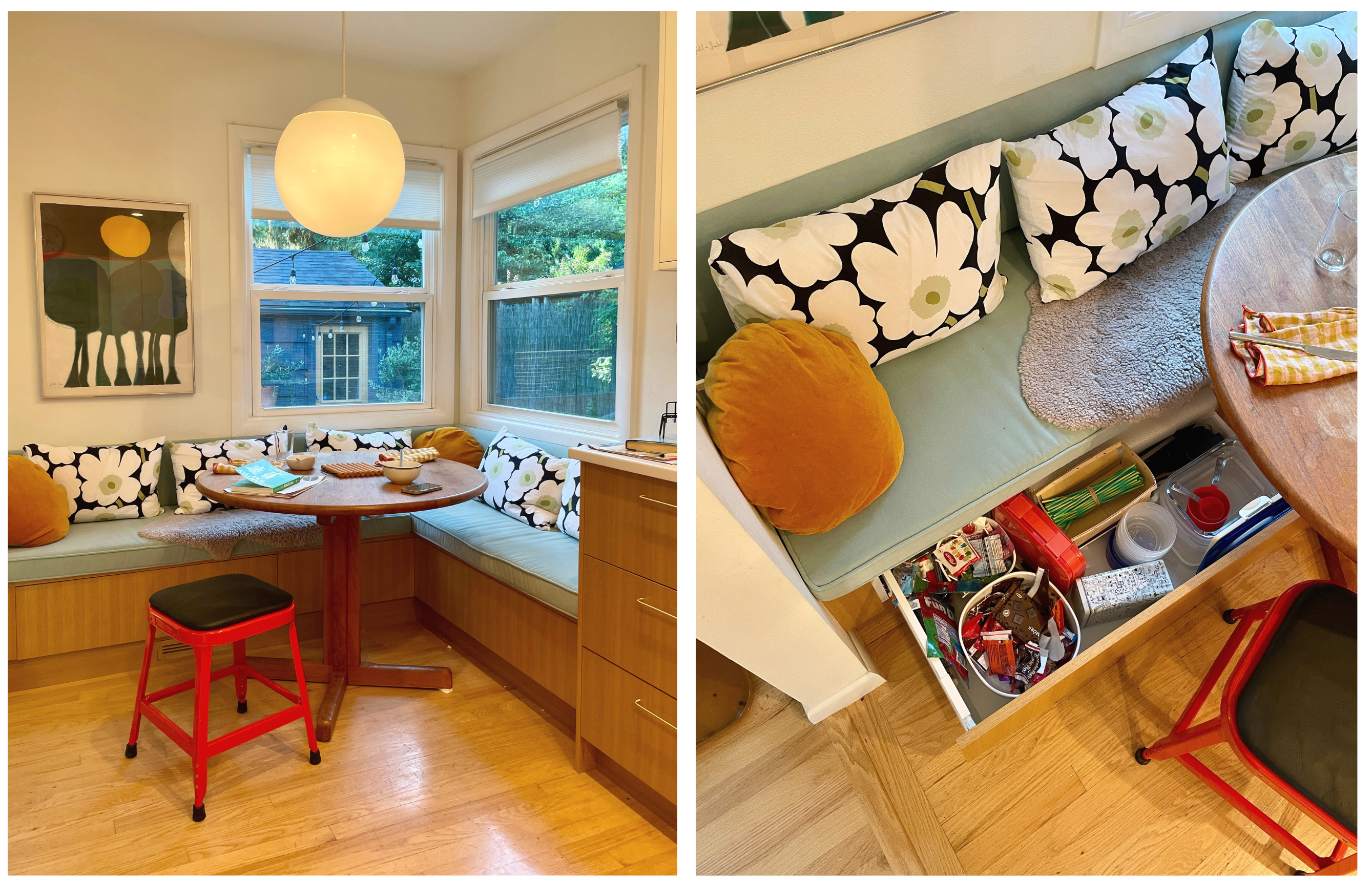
Custom built-ins are more involved but they make use of every last inch. I love how they seamlessly become part of the architecture while also serving a very practical purpose. When I remodeled our kitchen, I built a banquet for the dining nook to maximize seating and sneak in some extra storage. We used our IKEA kitchen cabinets that had the perfect deep-yet-low profile, set them on a plinth, added some cool mint and Marimekko fabric cushions—and presto!
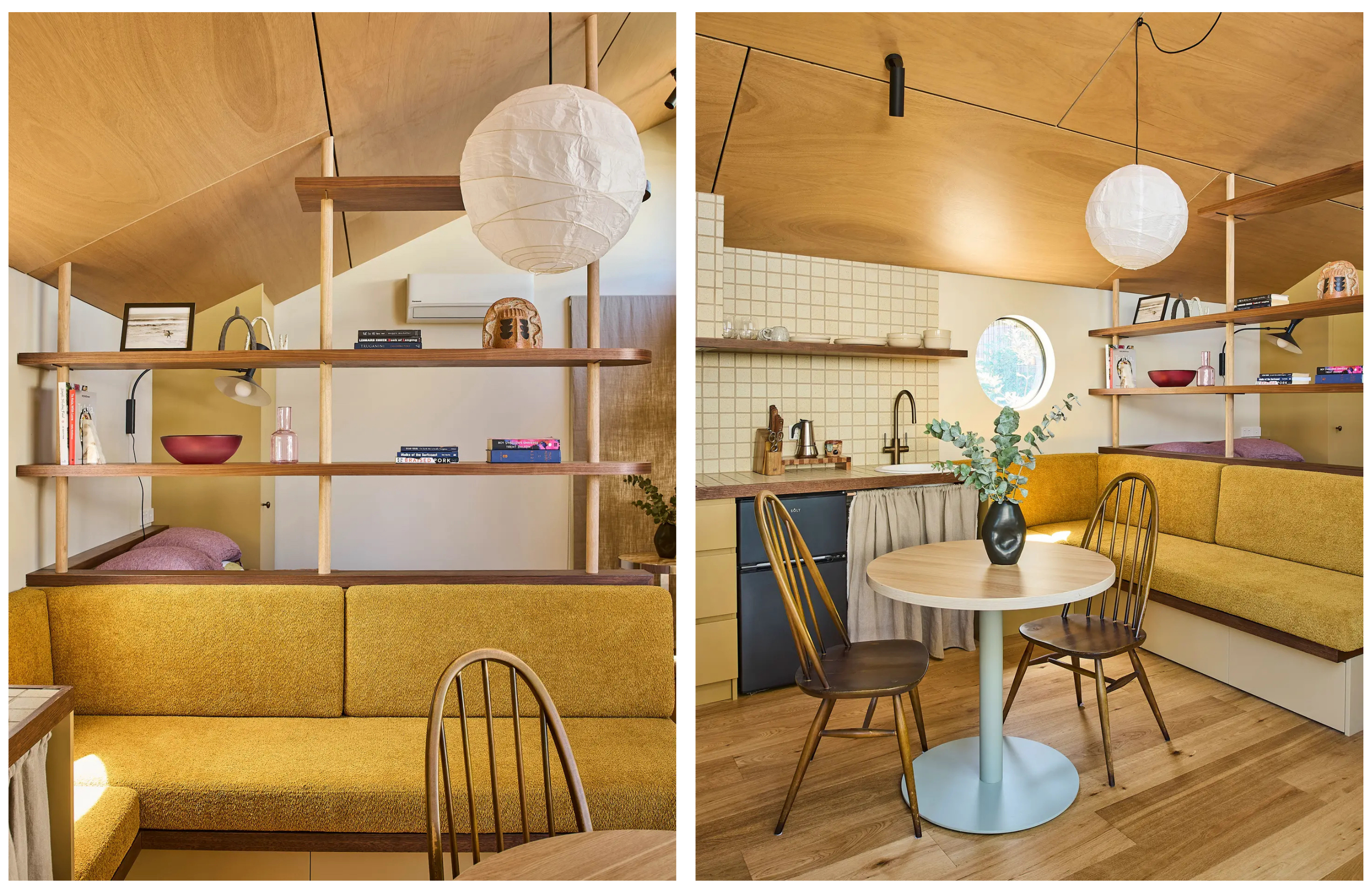
Another great built-in addition is bookshelves. The best ones act as storage and a room divider to keep things airy and open while helping to carve out little corners in studio apartments. That way, you can access things on either side of the shelf. (The idea works for bigger loft spaces that need some structure, too). While down a rabbit hole researching secret doors, I stumbled on this very cool (but spendy) design that lets you create a ta-da! moment with a sliding bookshelf door. Practical and mysterious for the win.
Go Big (Yes, Big!)
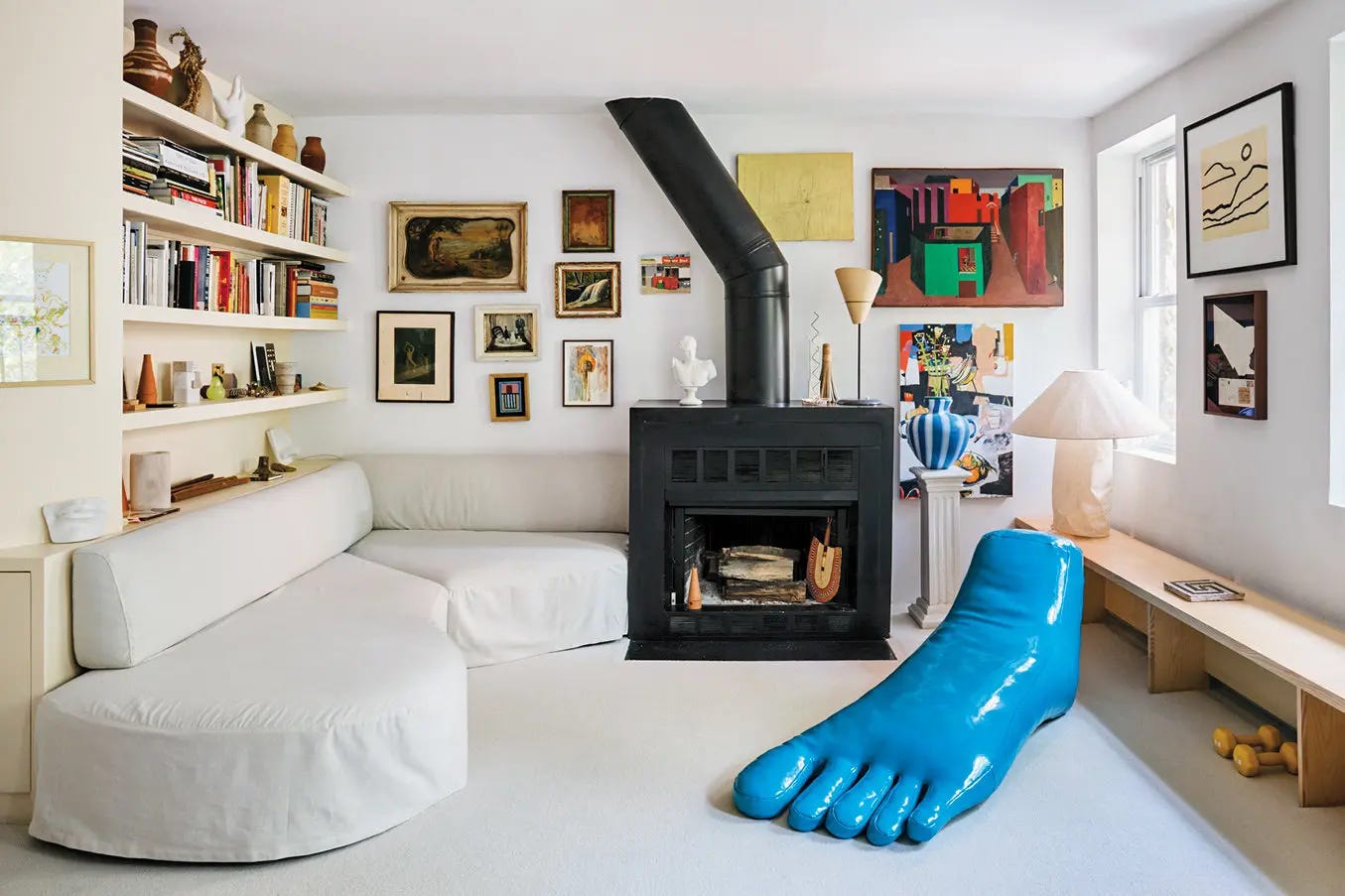
It might seem counterintuitive to go big in a small space but choosing fewer elements can have a calming effect rather than cluttering up your layout with several tiny furniture pieces. Don’t feel like you can’t have bolder moments. Play around with how things interact in the room (like this 322-square-foot Swedish flat and this NYC apartment).
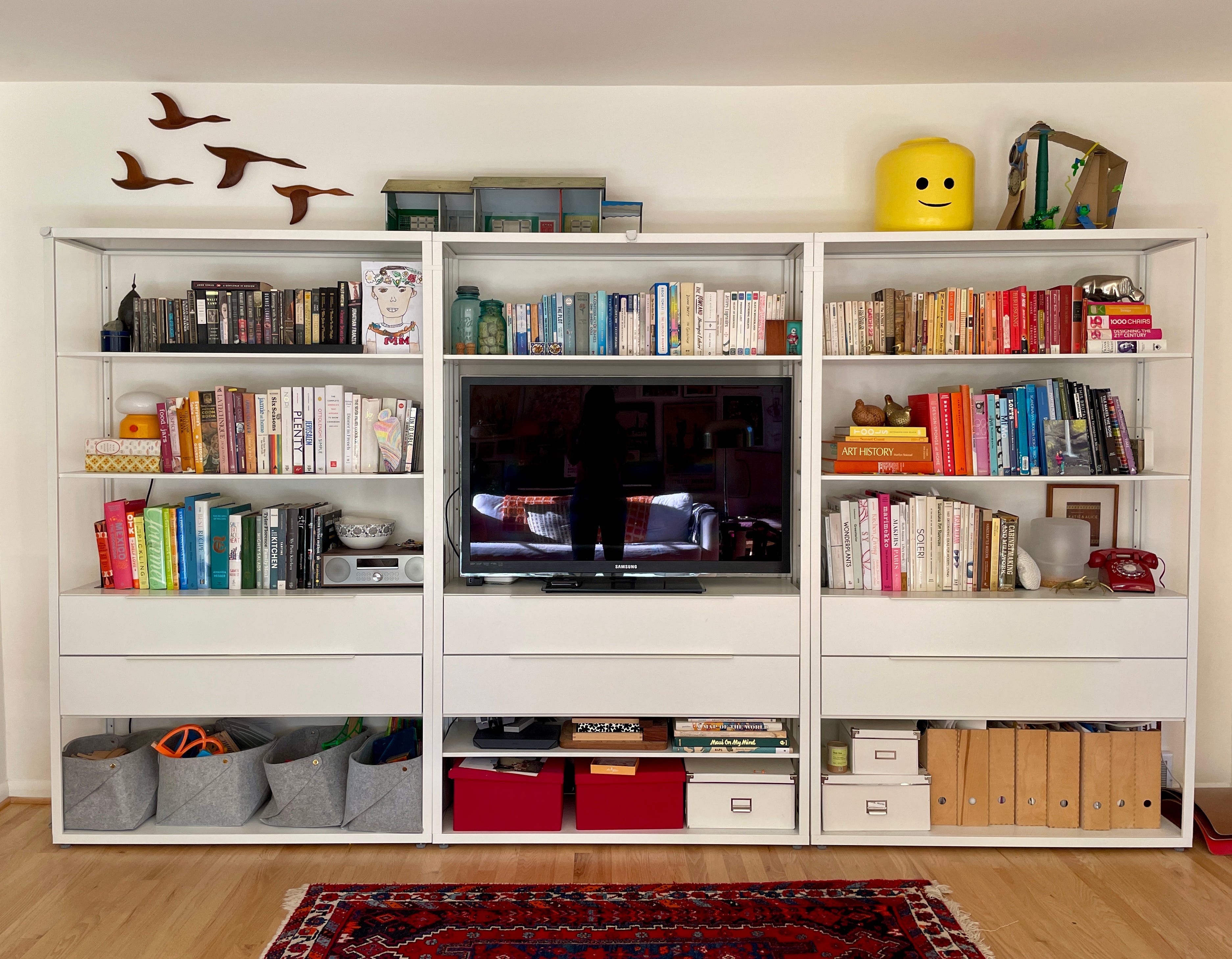
In my home, I covered one wall with three bookshelves (no longer available, but Miller Shelving from Schoolhouse has a similar look, and I love how it combines open and closed storage). The continuity of the horizontal lines creates a sense of spaciousness and uniformity. The shelves, organized by category then color, feature our collection of cookbooks, art books, and novels. The drawers hide away dining linens, Nintendo games, hats and gloves—and the bins we added below store toys, old photos and greeting cards, and my son's art from his pre-school days. Form and function, folks!
Think Vertical
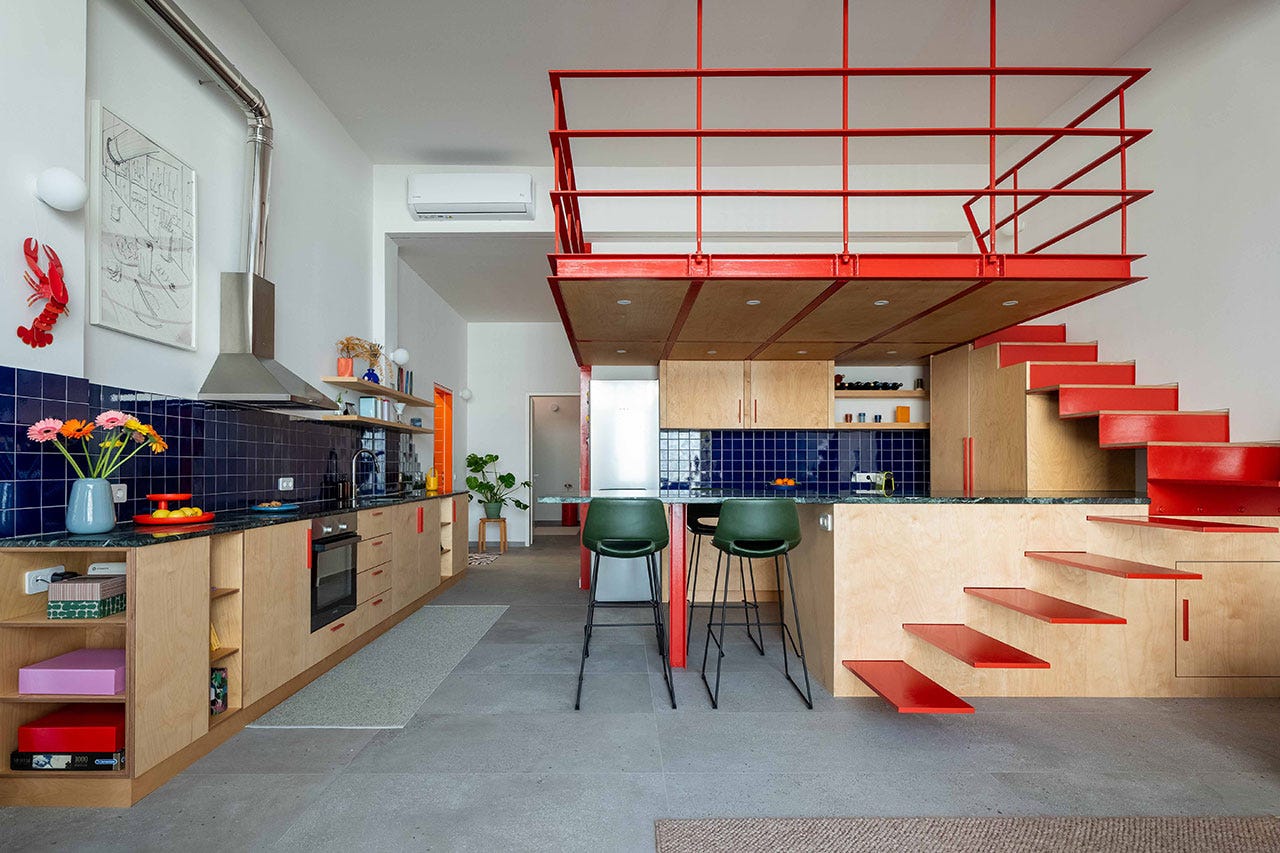
If you have high ceilings but a more limited footprint, consider building up and layering in a mezzanine-style lofted area for sleep or work. Engaging with the full three-dimensions of a room activates the ceiling and walls for use—instantly expanding our imaginations for new design possibilities.
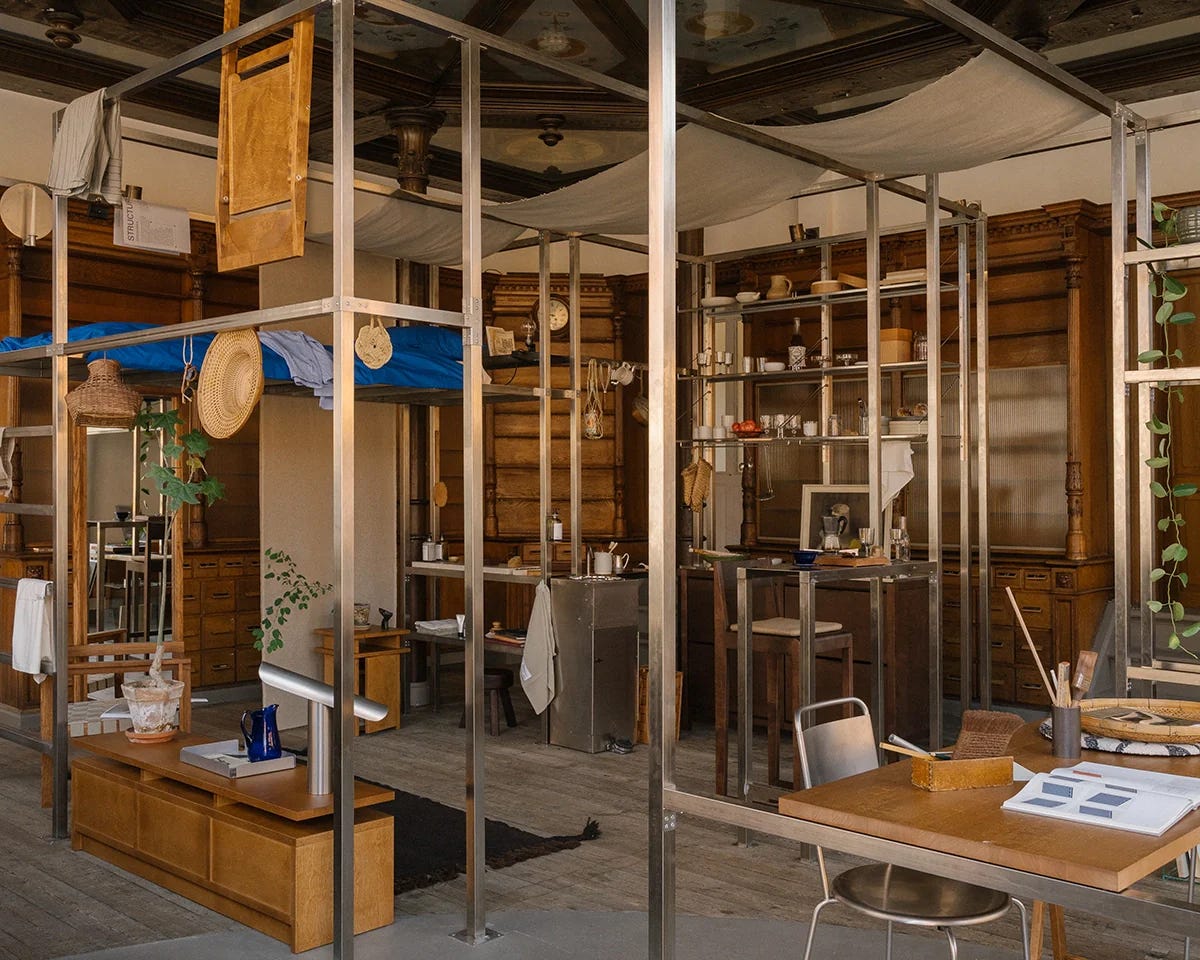
In a recent post, I mentioned a fascinating exhibit by Danish design brand Frama called Structures for Living. The installation and accompanying essay explored ideas around modular dwelling and questioned the norm of furniture being made to go only on the floor. They referred to Bruno Munari’s 1970s creation Abitacolo, a structure where children could dream up their own custom world. The “bed” could be built in numerous ways, giving the child ownership of how they use their cabin/cockpit (the rough translation of “abitacolo”—and my new 1st Dibs keyword alert). Do we adults all need our own version?!
Display Instead of Hide Away
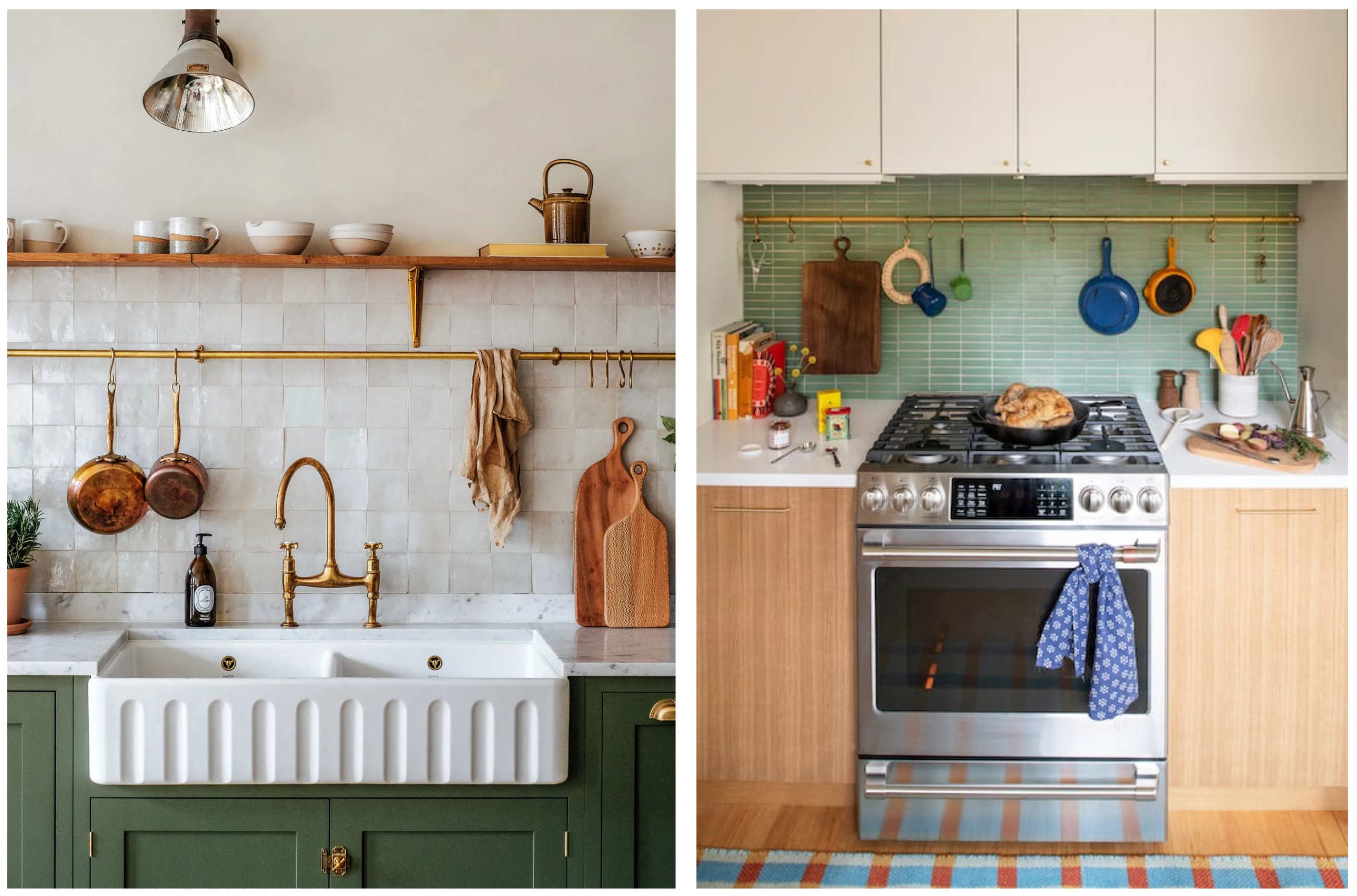
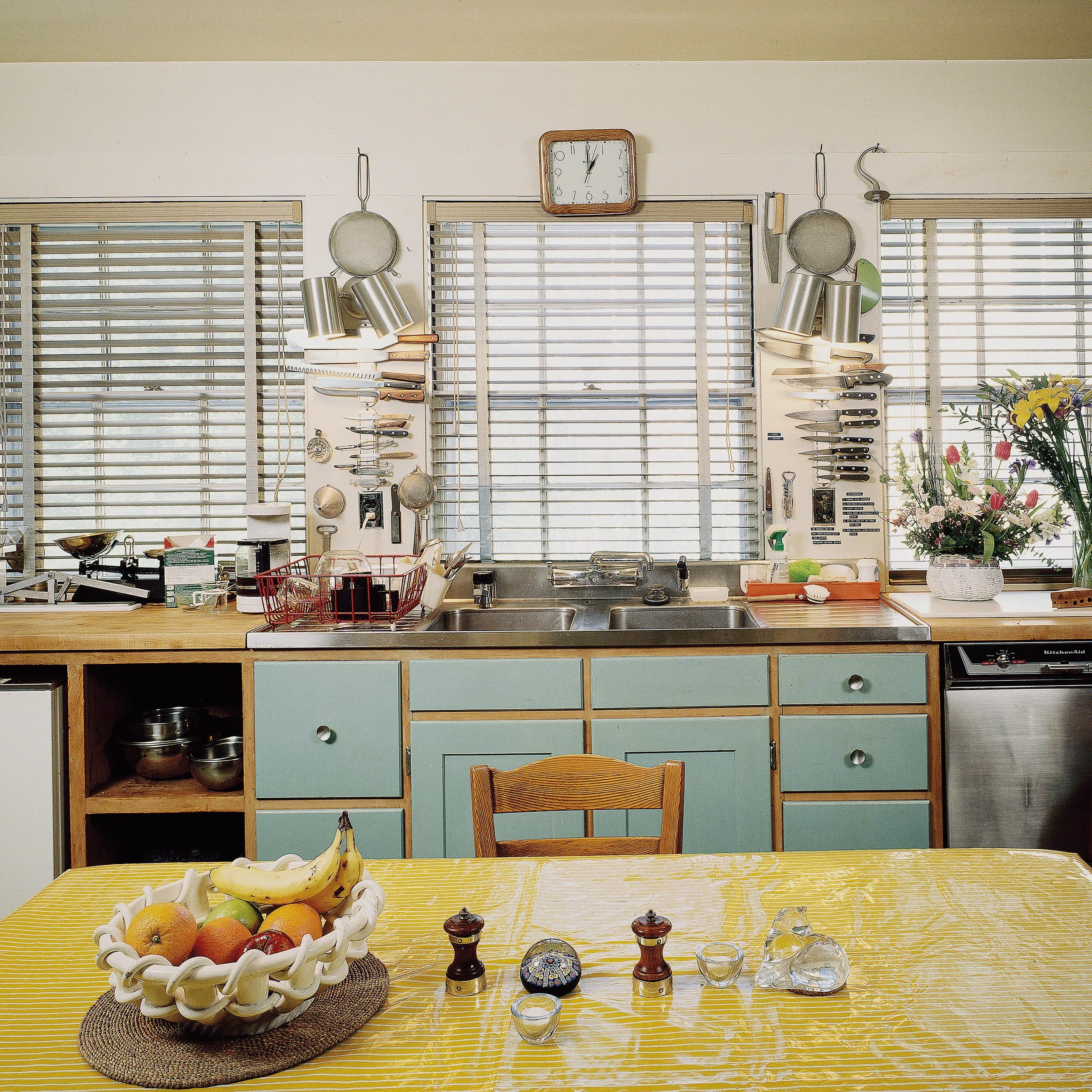
Riffing on the above, using surfaces as storage-slash-gallery-walls is a great way to make the most of a small space. Objects you love, use regularly, and that look interesting can be proudly displayed to not only make them easier to access but also to double as decor. My mind instantly goes to Julia Child’s kitchen with her iconic pegboard full of cooking tools. In my kitchen, I have a hanging rail from DeVol behind my stove for the pans we reach for most often, as well as our enamel syrup pots and pot holders.
The idea easily translates to an office or bathroom, too: Store things that get daily use and look nice out in the open (such as scissors on a hook; a statement calendar on a wall; patterned towels folded down a ladder; etc.) and stash away any items that are less aesthetically pleasing in hanging baskets or closed drawers.
Show Your Tray Chic
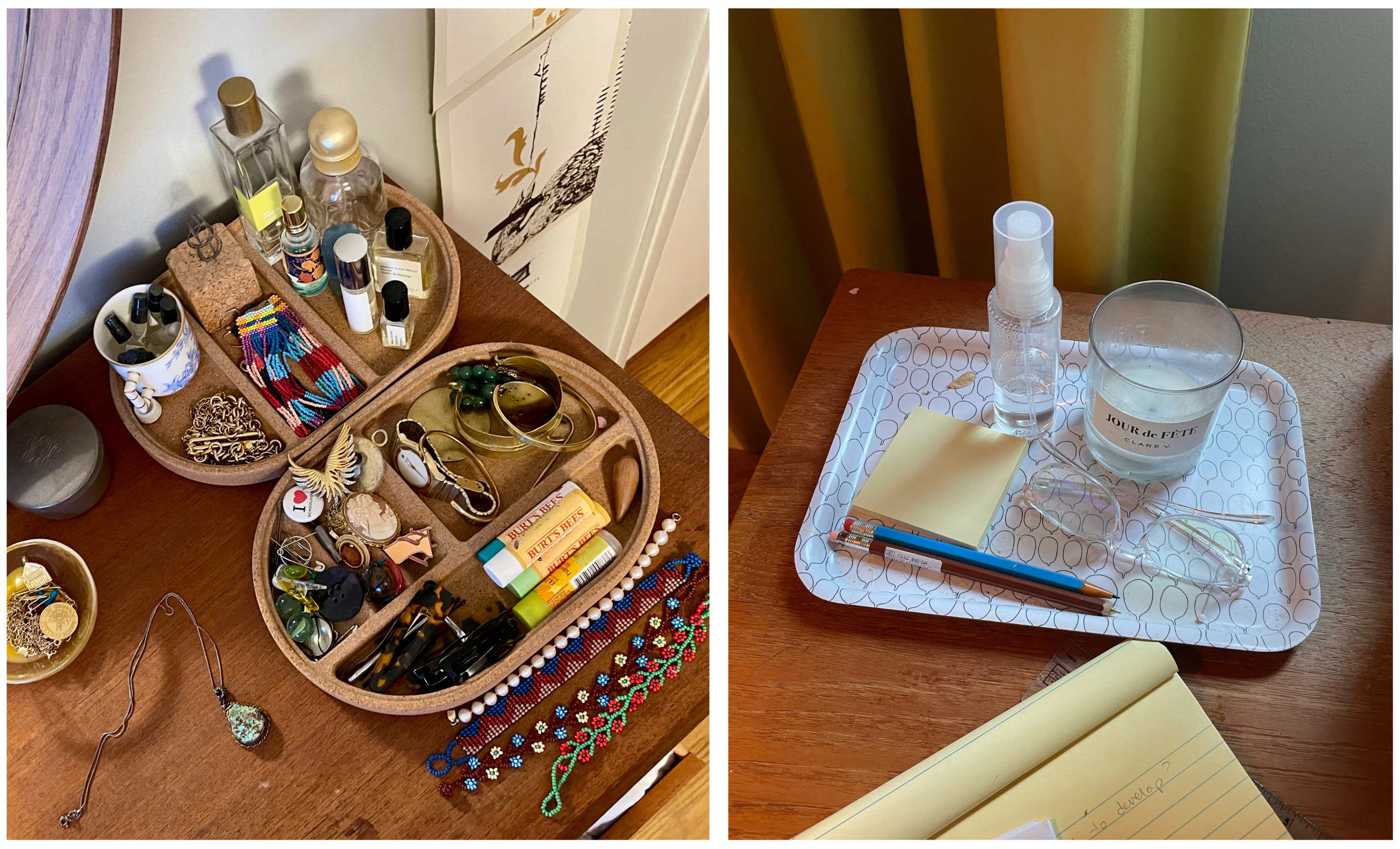
I have a few items that I’m always drawn to and some may say (my wife) I have too many of: chairs, lamps, and trays. I love trays because they deliver a compact punch of color, pattern, or form and add a stylish layer to a surface. But more importantly: They sneakily corral items together. Think: jewelry, candles, beauty products, decanters, drinking glasses, sea shells and natural ephemera, books, and so many other treasures in the dining room, laundry room, bathroom… The best part of all? Trays make cleaning a breeze: Just lift, swipe a cloth, and set all those little items back down in one swoop.
Transform With Textiles
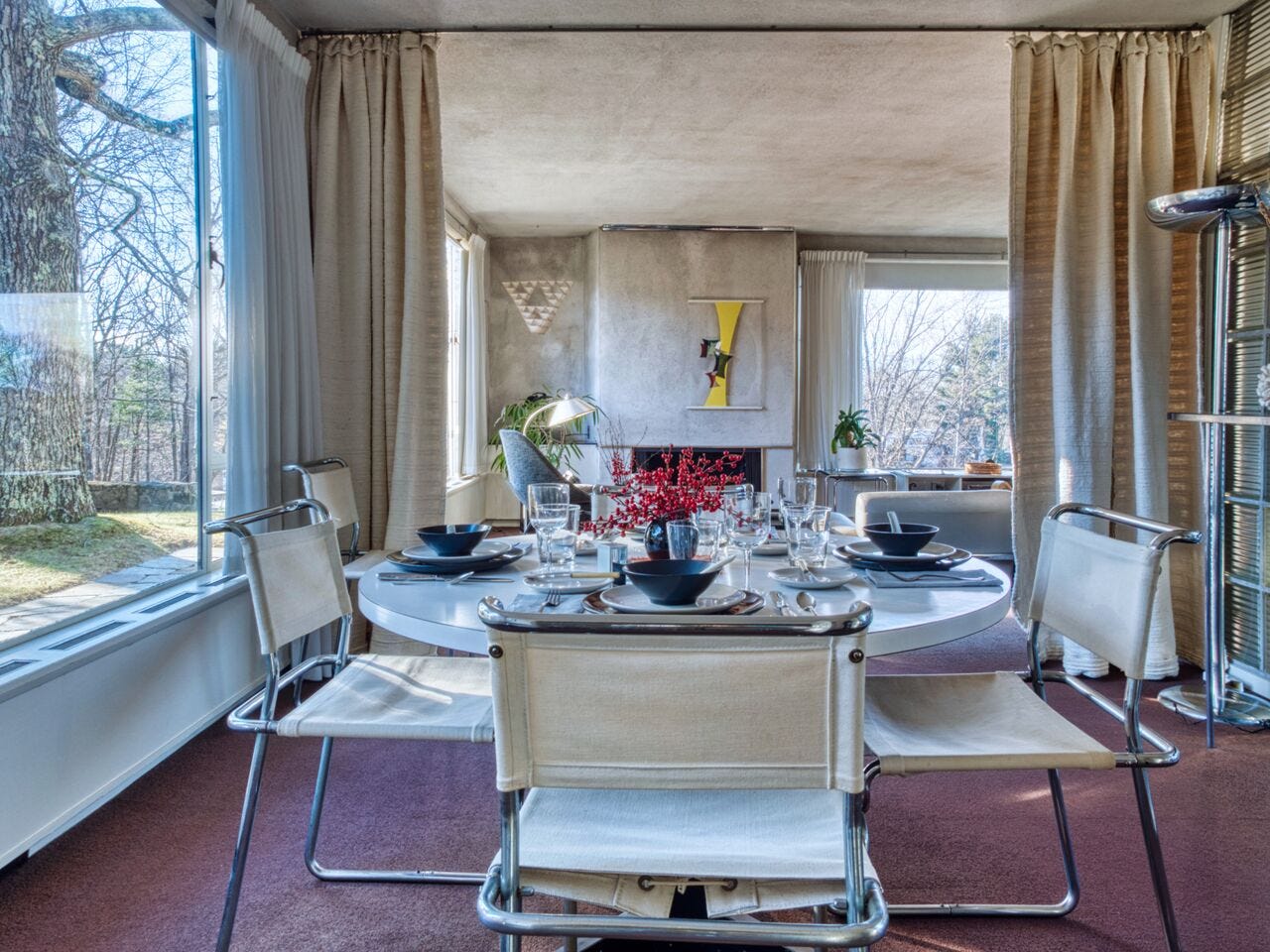
Fabric can be an unexpectedly practical tool when working in a small space. Curtains aren’t just for your windows; they create privacy, hide away clutter, dampen sound, or add warmth—and can be rearranged in a snap.
I love using fabric when wall space is at a premium and you want to display art rather than a TV. An elegant DIY cover can hide a wall-mounted TV when not in use, or install a projector screen that pulls down for movie nights then just as easily disappears.
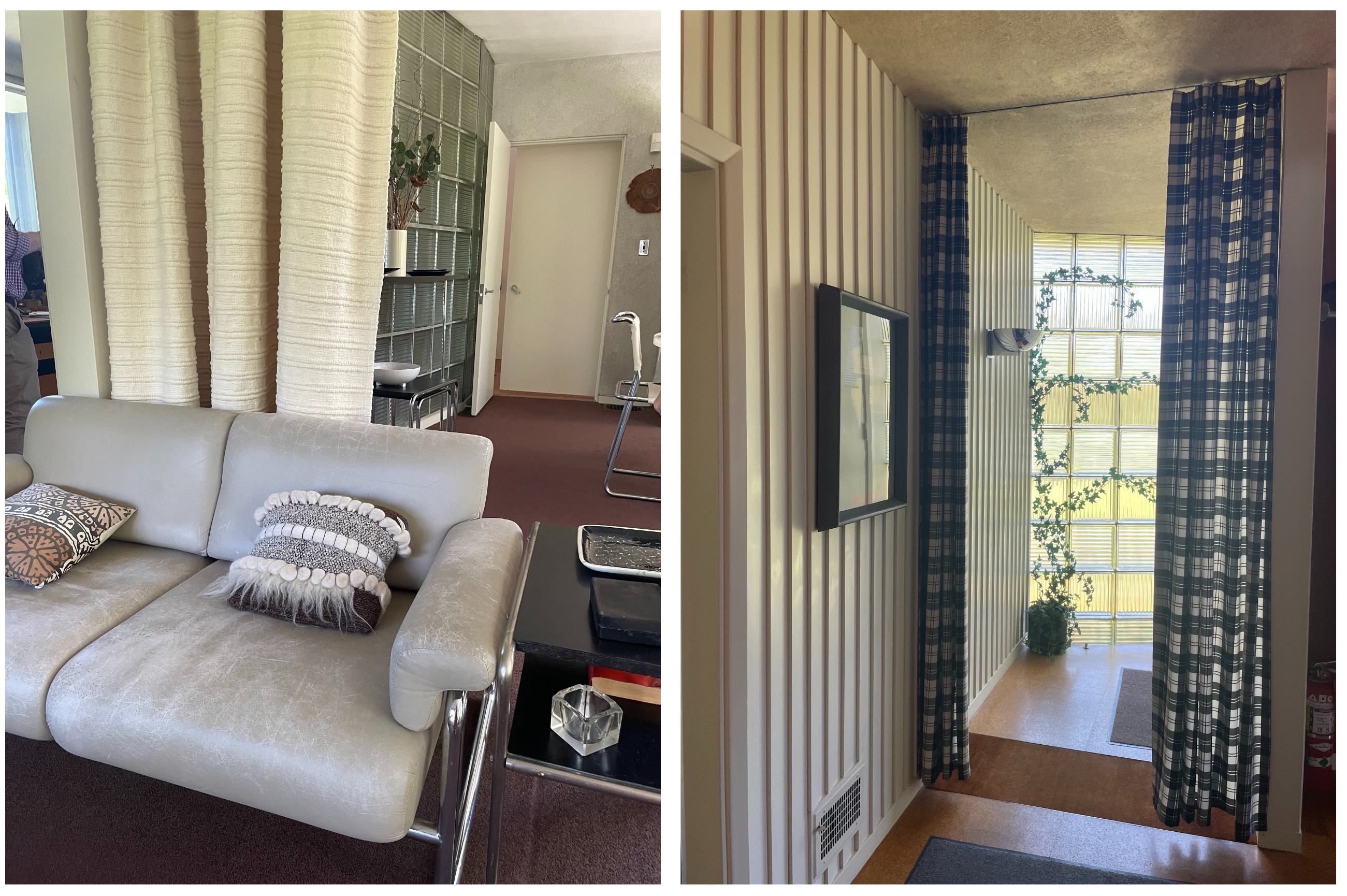
At the Walter Gropius home in Lincoln, Massachusetts, which I visited a couple years ago, curtains were cleverly used throughout the house. The entry features a fabric divide to help keep out cold in the wintry months. Between the dining room and living room there is a large curtain/moveable wall, so that when guests were enjoying pre-dinner conversation the table could be set without disturbing the ambiance—and likewise the dishes could be discreetly cleared later on. Upstairs, Gropius placed a curtain to close off the laundry nook in the hallway, streamlining the “stuff” and avoiding any intrusive door swings. Get yourself some curtain rods or tracks and start experimenting!

The Perfect Pouch

The Rhode Island-based leather goods company Lindquist Object (shout-out to my fellow RISD alumna!) combines beautiful craftsmanship, bold colors, and joyous forms that make me want to spend all my money. Their new collection is leaning into the love of scallops and I’m so here for it!
Did I miss any tips for small space living? Let me know, and I’ll share your ideas in my next post on Aug 26. Until then, have a wonderful rest of your month!
Katie xx
Which Ikea cabinets did you use for the built ins? I love the look of those!
I’ve been looking for a good source for nice trays—I like the Schoolhouse version, but anyone else have other recommendations?